


Views: 0 Author: Site Editor Publish Time: 2026-07-16 Origin: Site


Transitioning a footwear concept into a mass-produced reality is a formidable challenge. It involves high upfront costs, complex tooling processes, and strict quality control requirements. Many emerging brands struggle when moving from initial sketches to factory floors. They often miscalculate initial capital needs. Sometimes they choose incompatible production partners based purely on initial unit cost. This misstep can severely delay product launches. It drastically hurts long-term profit margins.
This guide provides a transparent, step-by-step roadmap for B2B buyers and brand owners. We help you navigate the entire manufacturing process safely. You will learn how to accurately forecast production costs. We explain how to engineer reliable prototypes efficiently. We also cover how to select vetted supply chain partners. Whether you are launching a new athletic line or scaling current operations, actionable insights remain critical. Let us explore exactly how to turn raw concepts into market-ready athletic footwear.
A comprehensive "Tech Pack" is the critical bridge between initial design and accurate factory prototyping.
Upfront tooling (mold) costs for custom outsoles are the primary driver of initial investment; leveraging "open molds" can significantly reduce early expenses.
Material selection strictly dictates performance characteristics across specific sub-categories (e.g., soccer vs. golf).
Standard wholesale production lead times typically range from 60 to 90 days after sample approval, excluding transit.
A successful manufacturing run relies entirely on clear communication. The foundational tool for this communication is your Tech Pack. Think of it as the ultimate production blueprint. You must include precise technical drawings and exact material callouts. Incorporating Pantone color codes ensures aesthetic consistency across multiple production batches. Furthermore, providing detailed sizing blueprints is absolutely mandatory. If you leave specific details open to interpretation, factory workers will guess. Guessing inevitably leads to costly prototyping errors and massive launch delays.
Next comes the vital "last" development phase. The last is a physical or digital foot model used to shape the shoe. Experienced pattern makers carve lasts from high-density resin or print them using industrial 3D printers. The last dictates internal volume, arch support, general fit, and overall athletic performance. Developing a highly accurate last ensures your footwear supports the wearer properly during intense physical movement.
Finally, footwear factories move into pattern engineering and physical prototyping. This workflow usually follows a strict sequence:
Paper and Digital Patterns: Engineers translate 3D design files into flat 2D cutting templates for the upper materials.
Pullover Sample: Factories create a rapid, rough physical sample. This step checks basic upper proportions and pattern alignment without attaching a final heavy sole.
Pre-Production Sample (PPS): This represents the final, fully functional prototype. Manufacturers build it using the actual bulk materials intended for mass production.
Tip: Never approve a bulk order based entirely on a beautiful digital rendering. You should always request a physical pre-production sample. Rigorously field-test this sample across your target size run. Ensure it meets your performance criteria before paying your final bulk deposit.
Choosing the correct raw materials heavily influences final product success. You constantly balance high-level performance against long-term durability. Modern mesh and engineered knits provide exceptional lightweight breathability. However, athletes also need heavy-duty structural support. Strategic TPU overlays and premium leather panels offer this necessary reinforcement. Each athletic application demands highly specific material choices to function correctly in real-world scenarios.
When designing soccer Shoes, emphasize highly abrasion-resistant synthetic leathers. Polyurethane (PU) synthetics often outperform traditional materials in wet playing conditions. You must also select cleat or stud materials optimized for specific turf types. Natural grass pitches require distinct traction profiles compared to artificial turf surfaces.
For basketball Shoes, focus heavily on impact absorption and lockdown support. High-density EVA or specialized PU midsoles provide essential cushioning after heavy jumps. Furthermore, rigid TPU shanks give players necessary lateral stability. These midfoot shanks prevent extreme twisting and offer vital ankle support during rapid direction changes on the court.
If your brand produces golf Shoes, prioritize all-weather utility. Waterproof membranes keep feet completely dry on wet morning grass. Gore-Tex or similar hydrophobic alternatives work perfectly here. You also need specialized spikeless rubber outsoles. They deliver excellent rotational traction during a powerful swing without tearing up delicate putting greens.
Sport Category | Primary Upper Material | Sole & Traction Focus | Key Performance Metric |
|---|---|---|---|
Soccer | Synthetic leather, engineered knit | Firm ground cleats, varied stud lengths | Abrasion resistance, ball touch |
Basketball | Reinforced mesh, TPU overlays | High-density EVA, lateral shanks | Impact absorption, ankle stability |
Golf | Waterproof synthetics, treated leather | Spikeless rubber, multi-directional lugs | Rotational grip, moisture protection |
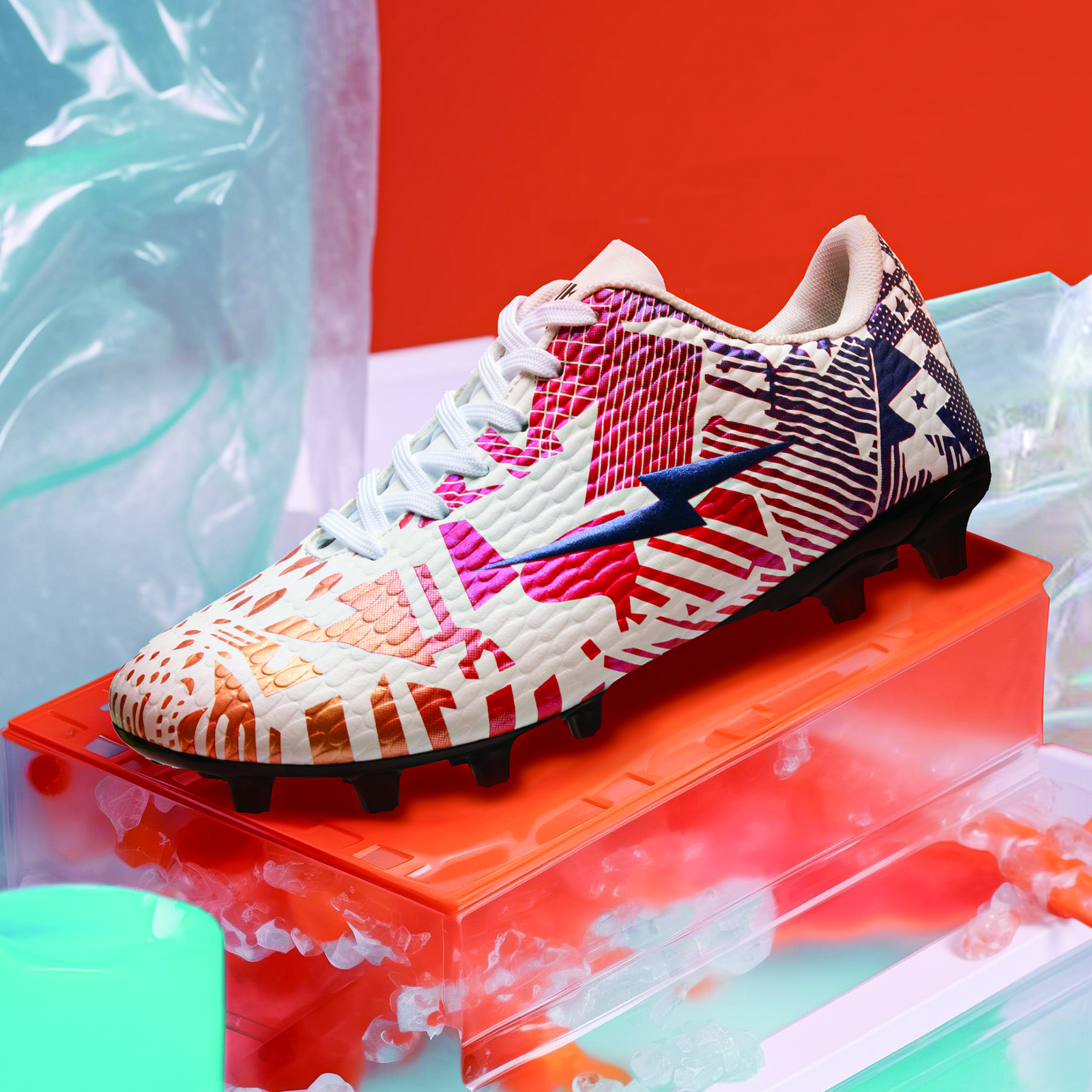
Premium athletic footwear requires precise material selection and meticulous prototype testing before mass production.
You must fully understand the economics behind custom outsoles before starting production. Tooling and mold costs represent a massive financial hurdle for new footwear brands. Every single sole size needs its own distinct steel or aluminum mold. Aluminum molds work well for lighter EVA midsoles. Conversely, heavy-duty rubber outsoles require expensive steel molds. Creating a full size run drives up initial capital requirements significantly.
Unit cost variables depend heavily on three specific operational factors. First, raw material quality dictates a large portion of your base price. Second, construction complexity directly alters factory pricing. For example, traditionally stitched soles require more time and cost more than simple cemented soles. Third, skilled labor rates vary heavily by region. Complex upper stitching demands highly experienced operators. This expertise naturally increases direct labor costs.
You must also understand Minimum Order Quantities (MOQs) thoroughly. Factory-level MOQs refer to the total footwear pairs assembled on the production line. They typically sit around 500 to 1000 pairs per style or colorway. However, material-level MOQs dictate the purchase of raw goods. Custom dyed fabrics or specialized foam compounds often require massive bulk purchases. Sometimes raw material MOQs force factory production MOQs much higher than initially anticipated.
Tip: Are you operating on a limited budget? Ask your manufacturer about using pre-existing "open molds". You can utilize an available, unbranded outsole design. Then, you simply customize the upper pattern to reflect your unique brand identity. This strategy completely bypasses expensive tooling fees and accelerates your market entry.
Selecting the right factory partner dictates your ultimate market viability. Choosing between OEM (Original Equipment Manufacturer) and Print-On-Demand (POD) is critical. OEM manufacturing provides highly scalable customization and superior quality control. It allows complete creative control over the shoe silhouette. Conversely, POD suppliers offer a low barrier to entry using pre-made blanks. However, POD models suffer from limited structural customization and extremely low profit margins.
When shortlisting factory capabilities, look for highly specific manufacturing infrastructure. Ensure they operate dedicated assembly lines built exclusively for athletic footwear. Check if they maintain rigorous in-house testing labs. They need standardized equipment to test sole flexing endurance and upper material abrasion. Demonstrated experience producing true performance footwear is completely non-negotiable.
Production Phase | Estimated Duration | Key Operational Milestones |
|---|---|---|
Initial Prototyping | 3 to 6 weeks | Pattern cutting, pullover review, PPS final approval |
Tooling & Molds | 4 to 6 weeks | 3D CAD sign-off, metal mold cutting, test injections |
Bulk Assembly | 30 to 60 days | Bulk material cutting, complex stitching, final lasting |
QC & Shipping | 2 to 4 weeks | AQL compliance inspection, customs clearance, ocean freight |
Successful custom footwear manufacturing relies heavily on thorough, front-loaded preparation. Creating highly accurate Tech Packs prevents costly downstream errors and keeps your project on budget. Rigorous physical prototype testing guarantees your design performs well in real-world athletic conditions.
Moving forward, prioritize long-term supplier reliability over chasing the absolute lowest initial unit quote. Strong communication ensures consistent product quality across multiple production runs. Take action today by rigorously auditing your current Tech Packs. Research open mold options to minimize your upfront capital risk. Ultimately, you must vet your factory partners against strict international compliance standards to build a resilient, scalable footwear brand.
A: A realistic industry average ranges from $1,000 to $3,000 or more per size. Complex designs requiring multiple material injections cost significantly more. If you need a full size run consisting of ten sizes, your upfront tooling investment can easily exceed $15,000 to $30,000 before mass manufacturing even begins.
A: Standard wholesale distributions follow a bell curve based on regional demographics. For men's footwear, buyers heavily weight sizes US 8 through 11. You order significantly fewer pairs at the extreme ends, such as US 7 or US 13. Retailers typically buy pre-packed cartons reflecting this localized statistical demand.
A: Yes. Sample development is an important step before mass production. A physical sample allows you to review the shoe construction, materials, fit, colors, branding, and overall workmanship before confirming bulk production. For custom projects, buyers should complete sample evaluation and approve the final pre-production specifications before moving into mass manufacturing.


