


Views: 0 Author: Site Editor Publish Time: 2026-07-22 Origin: Site


The global demand for specialized cycling footwear is surging rapidly. Enthusiasts actively seek out performance-driven gear to elevate their riding experience. For new and expanding brands, entering this niche presents a lucrative business opportunity. However, launching these products introduces distinct supply chain challenges.
Manufacturing Cycling Shoes is highly technical compared to producing standard Sports Shoes. It requires rigid carbon or nylon soles, anatomically precise lasts, and specialized closure systems. These specific components ensure maximum power transfer and consistent rider comfort. Overlooking these technical nuances often leads to expensive production delays.
Navigating this complex supply chain demands a highly strategic approach. We have created a step-by-step framework to help you evaluate B2B footwear manufacturers effectively. You will learn how to analyze tooling costs, mitigate production risks, and secure a reliable partner. A strong factory partnership will ultimately dictate your brand's long-term success.
Production Models: Choosing between OEM (custom from scratch) and ODM (white-labeling existing designs) dictates your initial tooling costs and time-to-market.
Technical Expertise: A credible manufacturer must demonstrate proven capabilities in power-transfer testing, sole-stiffness grading, and precision cleat mounting (2-hole vs. 3-hole).
Cost Structures: Tooling costs for individual sizes and half-sizes are the biggest barrier to entry; understanding MOQs (Minimum Order Quantities) by size and color is critical.
Quality Assurance: Real-world ride testing and delamination stress tests are non-negotiable phases in the prototyping workflow.
Startups and expanding athletic brands often underestimate the development timeline for technical footwear. Creating a performance shoe takes months of rigorous engineering. You must first decide on your core manufacturing strategy. This choice directly influences your capital expenditure and launch schedule. The footwear industry primarily operates on two distinct models: ODM and OEM.
ODM (Original Design Manufacturer) provides the fastest route for rapid market entry. You select pre-existing carbon or nylon sole molds directly from the factory catalog. You then modify the upper materials, colors, and branding elements. This approach drastically reduces initial development time. It allows new brands to focus heavily on marketing and sales.
OEM (Original Equipment Manufacturer) suits brands pursuing proprietary performance features. This route requires building entirely new lasts, which serve as the foot molds. You must also develop custom sole tooling from scratch. OEM offers complete creative control over stiffness, aerodynamics, and fit. However, it demands a significantly larger upfront investment.
You must perform a strict scalability check before signing any contracts. Ensure the factory has the capacity to support your brand long-term. They should easily transition your operations from low-volume ODM to high-volume OEM as your market share grows. A partner unable to scale will eventually stall your business momentum.
Best Practice: For new brands branching out from everyday Sports Shoes, utilize an existing ODM carbon sole mold. This strategy can save tens of thousands of dollars in initial tooling costs. It still allows for completely custom upper designs, giving your product a unique visual identity.
Chart: ODM vs. OEM Production Comparison | ||
Feature | ODM (White-Label) | OEM (Custom) |
|---|---|---|
Time to Market | Fast (3-5 months) | Slow (6-12 months) |
Tooling Costs | Low (Molds already exist) | High (Custom lasts and outsoles) |
Design Flexibility | Limited to uppers and colors | Unlimited (Fully bespoke) |
Best Fit For | Startups, rapid expansion | Established brands, pro-level gear |
Cycling footwear fundamentally differs from standard athletic apparel. It is not about cushioning or impact absorption. The design process revolves entirely around power transfer, aerodynamics, and heel retention. Your chosen factory must understand these critical features-to-outcomes relationships. They must demonstrate deep material science knowledge.
Sole construction forms the foundation of any riding shoe. You must carefully evaluate the factory's access to premium raw materials. Can they produce varying stiffness indexes across your product line? Entry-level models typically utilize nylon-fiberglass composite soles. Pro-level models demand uni-directional carbon fiber for maximum rigidity. The manufacturer should clearly explain their sole grading system.
Cleat system compatibility requires extreme precision during manufacturing. Ensure absolute accuracy in drilling and t-nut placement. Road shoes generally utilize a 3-hole system to accommodate SPD-SL or Look cleats. Mountain and commuter shoes rely on a 2-hole SPD system. Even a millimeter of deviation can ruin a rider's biomechanics.
Upper materials and closure systems demand equal scrutiny. Assess the factory's ability to manipulate high-density microfiber. They should also possess advanced knitting machines for breathable knit uppers. Technical closures define the upper's functionality.
Rotary Dials: Provide micro-adjustability and secure heel lock.
Velcro Straps: Offer lightweight, reliable retention for entry-level models.
Laces: Deliver aerodynamic benefits and classic aesthetics for purists.
Common Mistake: Do not assume every factory can source patented hardware. If your design requires proprietary closure systems like BOA Fit Systems, verify their credentials. Ensure the manufacturer is a certified or licensed partner. Failing to check this often leads to severe supply chain bottlenecks.
The cost to manufacture high-performance footwear is heavily front-loaded. You must address the harsh realities of mold-making early in your planning phase. Tooling represents the single largest capital expense for any new shoe brand. Without a clear budget, unexpected tooling invoices will quickly drain your resources.
The size-run problem causes major headaches for new footwear entrepreneurs. Unlike producing t-shirts, shoes require extreme physical precision. Each shoe size requires its own specific last. Furthermore, every half-size demands a completely unique outsole mold. Launching a full size range requires dozens of distinct, expensive metal molds.
You must deeply understand factory Minimum Order Quantity (MOQ) structures. Factories rarely calculate MOQs as a flat number. They break down MOQs intricately by size and colorway. For example, an overall MOQ might be 500 pairs per style. However, the factory may require a minimum of 50 pairs per specific size and color combination.
Perform a strict unit cost versus value analysis before launching. Compare the per-unit cost of a premium carbon shoe against retail margin expectations. The enthusiast cycling market accepts higher retail prices. Still, your margins must comfortably cover your operational expenses, shipping, and marketing efforts.
Tip: Request a comprehensive cost breakdown during your initial outreach. Ask the factory to separate the Non-Recurring Engineering (NRE) tooling costs from the per-unit manufacturing cost. This separation allows you to accurately calculate your break-even point over a multi-year timeline.
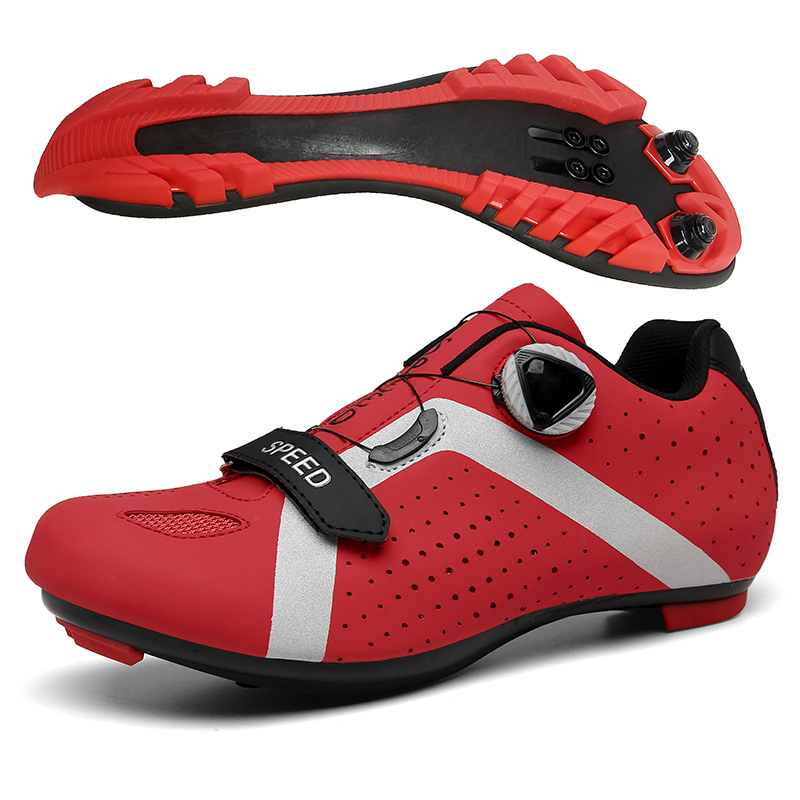
Premium cycling shoe manufacturing requires precise tooling and rigorous quality control for every size run.
Mapping out the timeline from technical pack (Tech Pack) to final mass production is critical. A Tech Pack acts as the master blueprint for your factory. It details every material, measurement, and hardware requirement. A well-structured prototyping workflow prevents costly errors from reaching the final assembly line.
The footwear industry relies on a rigorous 3-Stage Sample Process. You must require your manufacturer to follow this exact sequence:
Pullover Sample: The factory creates this initial prototype to check upper aesthetics. It allows you to evaluate material feel and pattern placement before sole attachment.
Fitting Sample: Workers build this version on the actual last. You use it to verify internal volume, heel cup grip, and arch support.
Confirmation Sample (Pre-Production): This represents the finalized, ride-ready prototype. It reflects the exact materials and assembly methods used in mass production.
Critical QC metrics govern the integrity of Cycling Shoes. Delamination testing measures the bond strength between the upper and the sole. The upper must never separate from the rigid sole under high wattage outputs. Cleat thread torque testing ensures the metal hardware can withstand repeated pedaling force without stripping.
Note: Never approve mass production based solely on a visual inspection. Always require a real-world ride test of the Confirmation Sample. An experienced cyclist should test the prototype for several weeks. They will identify hidden hot spots, power loss, and material chafing.
Modern consumers demand accountability from the brands they support. Choosing a partner offering a transparent supply chain provides vital risk mitigation. You must know exactly where the factory sources its raw materials. This transparency is especially crucial when sourcing complex composites like carbon fiber and synthetic leathers.
Establishing realistic expectations for lead times keeps your business running smoothly. Material sourcing often requires 30 to 45 days. Suppliers must weave specific microfiber densities or cure custom carbon plates. Final assembly typically adds another 30 to 60 days to the schedule. Factor these timelines into your seasonal product launches.
Certifications serve as proof of a factory's operational maturity. Look specifically for ISO 9001, which governs standardized Quality Management systems. You should also demand fair-labor compliance standards. Ethical manufacturing protects your brand reputation and appeals strongly to environmentally conscious athletes.
Create a vendor matrix to streamline your shortlisting logic. Compare potential partners systematically across several operational vectors.
Evaluation Criteria | Importance Level | Key Indicators to Look For |
|---|---|---|
Communication Speed | High | Replies within 24 hours; proactive problem solving. |
English Proficiency | Medium | Account managers understand technical footwear terminology. |
Audit Willingness | Critical | Readily accepts third-party factory inspections. |
Prototyping Speed | High | Delivers first pullover sample within 21 days. |
Building a successful footwear brand requires meticulous planning and a reliable production partner. You must match your available budget to the correct production model. Startups benefit greatly from ODM, while established brands require OEM exclusivity. Demand undeniable technical proof of sole rigidity, cleat precision, and upper durability before committing.
Always calculate your tooling costs meticulously per size to avoid budget overruns. Remember, an exceptional manufacturing partner acts as a proactive technical advisor. They do not merely operate as passive order-takers. They will guide you through complex material choices and testing protocols.
Take action today by finalizing your comprehensive Tech Pack. Next, reach out to three to five shortlisted manufacturers. Request preliminary quotes, tooling estimates, and proof of ISO certifications. Comparing these initial bids will clearly reveal the best factory for your long-term vision.
A: Costs vary wildly between models. An ODM approach might require $15,000 to $30,000 for initial inventory and marketing. An OEM project demands custom lasts and molds, pushing initial costs between $50,000 and $100,000+. Always factor in molds, specific MOQs, freight shipping, and import duties when planning your budget.
A: The industry standard typically ranges from 300 to 1,000 pairs per style. This depends heavily on raw material availability. Factories often break this down further, requiring a minimum of 50 to 100 pairs per colorway and specific size.
A: Developing a fully custom OEM shoe generally takes 4 to 8 months. This timeline moves from initial sketches and 3D modeling to mass production readiness. The process involves multiple sampling rounds and mandatory real-world ride testing to ensure performance.
A: Yes, many high-tier factories employ in-house R&D teams. They can translate rough sketches into technical blueprints. However, you must provide clear visual references. For highly specialized designs, we recommend hiring a dedicated footwear designer to create a complete Tech Pack first.


