


Views: 0 Author: Site Editor Publish Time: 2026-08-03 Origin: Site


The global athletic footwear market is evolving rapidly. Modern players demand faster, lighter, and more responsive gear. Brands ignoring these expectations will quickly lose relevance. The 2026 market demands a critical shift from legacy footwear to high-performance, sustainable designs. This creates a narrow window for procurement teams and retailers to strategically update their inventory.
Delaying this transition creates massive risks. You risk alienating elite athletes. You also risk failing to meet stricter global compliance standards. You need actionable criteria to evaluate upcoming innovations against cost, scalability, and shifting consumer demand. This guide breaks down next-gen materials, AI-driven technologies, and supply chain realities. It equips buyers, distributors, and product developers to build a profitable, future-proof product lineup. Whether you source premium Soccer Shoes or versatile trainers, these insights will help you secure your market position.
Bio-based synthetic knits and hybrid TPU sole plates are dominating the 2026 material landscape, balancing performance with ESG compliance.
AI-optimized traction and adaptive lacing systems are non-negotiable features for premium tier sports shoes.
Supply chain scalability and production costs for sustainable materials remain the primary risk factors for bulk procurement.
Shortlisting criteria must now heavily weigh material longevity and compliance certifications alongside player performance metrics.
Consumer expectations have shifted dramatically over the past two years. Pre-2024 technology no longer satisfies elite or amateur athletes. Players now expect ultra-lightweight profiles, responsive energy return, and eco-friendly manufacturing. Holding onto older inventory actively limits your market share. Competitors offering modern, sustainable designs will easily capture your target demographic.
Upgrading your catalog requires analyzing the return on investment. Advanced athletic footwear requires higher initial procurement costs. However, these premium products carry significantly higher retail margins. Traditional, lower-margin models often generate lower overall profit. Elite models drive consumer excitement. They build brand loyalty. They create halo effects boosting sales across your entire catalog.
Procurement teams need strict success criteria to identify profitable SKUs in 2026. You must evaluate several key performance indicators. First, look at the inventory turnover rate. Premium models should move quickly off shelves. Second, monitor the return rate due to material failure. High-tech materials must survive extreme on-pitch stress. Finally, measure brand trust. Consumers reward brands offering sustainable, transparent manufacturing processes.
Turnover Rate: High-demand tech features accelerate sales cycles.
Defect Reduction: Better manufacturing reduces costly customer returns.
Brand Equity: Eco-conscious products build long-term consumer loyalty.
Retailers delaying the transition to sustainable and tech-integrated footwear risk higher long-term acquisition costs as regulatory and consumer ESG standards tighten.
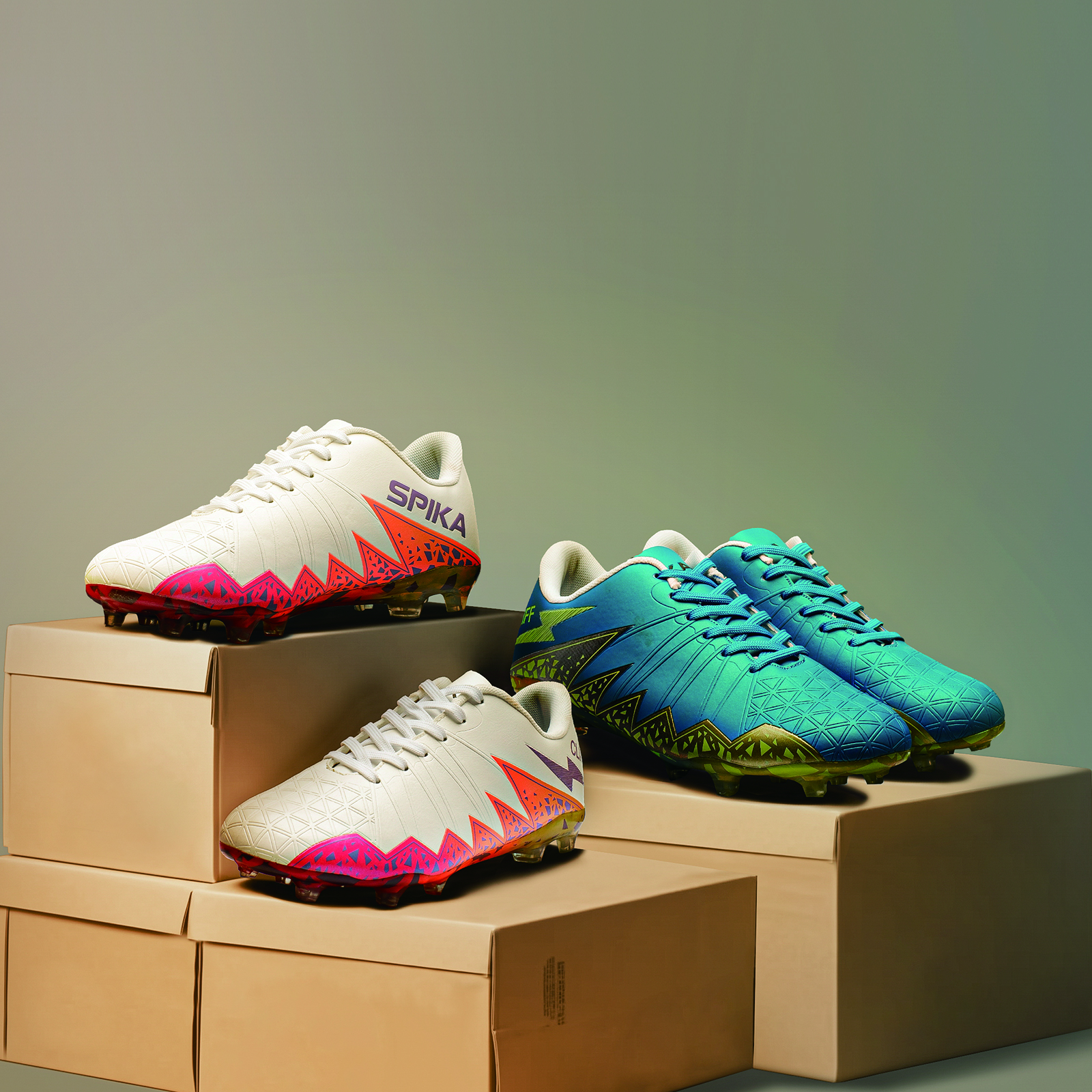
Premium 2026 soccer shoe design showcasing adaptive lacing and a lightweight hybrid TPU sole plate.
Footwear uppers are undergoing a massive transformation. Many regions have restricted traditional K-leather sales. Manufacturers are pivoting rapidly. Standard synthetics feel stiff and lack breathability. Instead, the 2026 market favors bio-based microfibers and engineered knits. These materials mimic the soft touch of natural leather. They stretch dynamically. They also drastically reduce reliance on petroleum-based plastics.
Sole plates are seeing equally impressive innovations. Traditional nylon plates feel heavy. Next-gen plates utilize carbon-infused nylon and hybrid TPU (Thermoplastic Polyurethane). Carbon infusion delivers maximum energy return during sprinting. Hybrid TPU offers exceptional flexibility in the forefoot. This combination reduces overall shoe weight. It helps players maintain top speed late in a match.
However, you must consider durability trade-offs. Lightweight composites face immense stress. Extremely thin upper knits can tear during heavy tackles. Stiff carbon plates occasionally crack under repeated bending. Procurement teams must balance manufacturing costs against material lifespan. Cheaper composites degrade quickly. This leads to higher return rates and damaged brand reputation.
To visualize this shift, review the material comparison chart below:
Material Type | Traditional (Pre-2024) | Next-Gen (2026 Standard) | Primary Benefit |
|---|---|---|---|
Upper | K-Leather / PU Synthetics | Bio-based Microfiber / Engineered Knit | Ethical sourcing, dynamic fit |
Sole Plate | Standard Nylon / Heavy TPU | Carbon-Infused Nylon / Hybrid TPU | High energy return, weight drop |
Adhesives | Solvent-based glue | Water-based, non-toxic cement | ESG compliance, worker safety |
Tip: When sourcing bio-based Soccer Shoes, request independent abrasion and tensile strength test data to ensure the materials withstand real-world pitch conditions without premature degradation.
Athletes want data-backed performance. Brands now use generative design and artificial intelligence to optimize traction systems. AI-simulated stud configurations analyze foot pressure during sharp turns. This creates highly efficient stud placements. Hybrid multi-ground (MG) models perform perfectly on natural grass. They also offer optimal grip on firm-ground (FG) and artificial turf. This versatility appeals massively to amateur players.
Adaptive fit technologies represent another non-negotiable feature. Laceless compression bands provide a clean striking surface. However, they can lose elasticity over time. Dynamic lacing systems provide a better solution. They use reinforced midfoot cables. These cables tighten evenly across the foot. This locks the heel firmly in place. It prevents internal slipping. It actively reduces the risk of ankle rolls and blisters.
Micro-texturing significantly improves ball control. Brands use 3D-printed grip elements across the instep and toe box. These raised textures create friction in wet conditions. They help players spin and control the ball at high speeds. Procurement teams must assess the actual on-pitch value of these elements. Complex 3D printing adds manufacturing time. It increases unit costs. You must ensure the chosen texture genuinely enhances performance rather than acting merely as visual decoration.
Traction algorithms: Optimize stud shape for dual-surface play.
Lockdown cables: Prevent midfoot rollover during lateral movements.
3D grip zones: Deliver enhanced friction for wet-weather ball control.
Innovation brings manufacturing challenges. Scaling 3D-printed components causes significant production bottlenecks. Advanced knit uppers require highly specialized looming machines. Many factories lack this specialized equipment. Mass producing these components takes more time than molding standard synthetic panels. You must account for longer lead times when planning your 2026 inventory rollouts.
Environmental, Social, and Governance (ESG) compliance is no longer optional. Global regulations demand strict green certifications. You must navigate complex ISO standards like ISO 14001. You need robust verification for recycled content in sole materials. Water-based adhesives are mandatory in many jurisdictions. Failing to meet these compliance standards can result in blocked shipments or severe retail penalties.
Geopolitical factors heavily influence pricing volatility. Raw material scarcity directly impacts wholesale pricing. Bio-based resins and recycled polymers face frequent supply shortages. Shipping disruptions further complicate the cost structure. Premium models face sudden price hikes. You must build flexible procurement budgets to absorb these short-term shocks.
Note: Always verify the origin of "recycled" or "eco-friendly" claims with supplier-provided lifecycle assessments (LCAs) to avoid greenwashing risks that could damage brand credibility.
You need a structured framework to evaluate upcoming product lines. Relying on visual aesthetics alone guarantees failure. Use a robust procurement matrix. You must balance unit costs, technical specifications, and target demographic needs. Elite players will pay premium prices for marginal performance gains. Recreational players demand durability and comfort at accessible price points.
We recommend standardizing your evaluation process. Compare the feature against the outcome. Then map the B2B cost impact against your target market. This prevents you from overpaying for high-tech features your customers do not actually need. Use the feature-to-outcome comparison table below to guide your purchasing decisions.
Material / Tech | Primary Player Benefit | B2B Cost Impact | Target Market |
|---|---|---|---|
Carbon Soleplate | Explosive energy return | High | Elite / Professional |
Bio-knit Upper | Lightweight, adaptive fit | Medium-High | Elite / Advanced Amateur |
Hybrid TPU Studs | Multi-ground versatility | Medium | Amateur / Recreational |
3D Grip Texturing | Enhanced wet ball control | Medium | Advanced Amateur |
Never commit to high-volume purchase orders blindly. Always plan pilot testing logistics. Roll out limited regional testing first. Send samples to local academies or sponsored athletes. Gather feedback on fit, durability, and comfort. This beta-testing prevents costly inventory mistakes. It guarantees you only stock proven, high-performing footwear.
Tip: Prioritize vendors who offer modular inventory options, allowing you to restock high-demand sizes and stud configurations without committing to bulk generic Sports Shoes.
The 2026 footwear landscape requires a strategic approach to purchasing. Success requires carefully balancing cutting-edge performance tech with transparent, sustainable manufacturing. Brands must deliver lightweight speed, anatomical lockdown, and verifiable eco-friendly materials. Ignoring these trends will leave your inventory obsolete.
Take immediate action to prepare your supply chain. We recommend the following next steps:
Initiate comprehensive supplier audits immediately.
Secure favorable pricing on next-gen materials before Q3/Q4 production surges.
Request detailed LCAs and ISO certifications from all manufacturing partners.
Launch regional pilot tests for new bio-knit models.
A: Focus on advancements in hybrid TPU and reinforced bio-synthetics. These materials bridge the gap between lightweight tech and long-term longevity. They resist abrasion significantly better than early-generation recycled plastics while maintaining extreme flexibility.
A: Expect a short-term pricing premium for green manufacturing. Advanced bio-resins and specialized knitting machines require heavy initial capital. However, address this as an investment. You will see long-term cost stabilization as global supply chains scale and optimize production.
A: MG configurations feature medium-length, strategically distributed studs designed to perform adequately on both firm grass and turf. AG models use shorter, hollowed studs to reduce harsh joint impact on stiff synthetic pitches. Hybrid MG models are rapidly gaining market share due to their versatility.


