


Views: 0 Author: Site Editor Publish Time: 2026-05-21 Origin: Site


Balancing cost-efficiency and long-term durability challenges many buyers in synthetic footwear production. Brands frequently face difficult choices between budget-friendly materials and strict high-performance requirements. Sourcing teams need reliable methods to secure high-quality inventory without blowing their production budgets.
Navigating different material grades and factory capabilities is inherently complex. You must mitigate severe quality risks, such as surface peeling and hydrolysis, well before bulk production begins. Without a solid technical framework, buyers risk poor manufacturing yields, high return rates, and damaged brand reputation.
This guide helps you evaluate modern synthetic material grades effectively. You will discover the chemical science behind material aging and learn exactly how to assess manufacturing quality standards. We will also show you practical strategies to filter reliable suppliers, structure pilot runs, and build a resilient supply chain.
Not all PU is identical; selecting the correct grade (e.g., high-peel PU) is critical for performance-heavy categories like soccer shoes.
Premature aging in PU leather is a chemical issue that verifiable UV and anti-hydrolysis treatments can prevent.
Structured pilot runs and clear Quality Assurance (QA) agreements are non-negotiable for mitigating bulk production risks.
Selecting the correct raw materials forms the foundation of reliable footwear manufacturing. Buyers must understand exactly what synthetic layers comprise their product.
Footwear brands cannot use a one-size-fits-all approach for synthetic materials. Different product lines demand specific tensile strengths and abrasion resistance levels. We can categorize these materials into a simple matrix.
Material Grade | Base Structure | Key Characteristics | Primary Application |
|---|---|---|---|
Standard PU | Woven Fabric | Cost-effective, low breathability, moderate flex. | Fast-fashion, entry-level casual shoes. |
High-Peel PU | Dense Woven | High tensile strength, excellent scuff resistance. | Athletic footwear, hiking boots. |
Microfiber PU | 3D Non-Woven Matrix | Superior tear strength, breathable, mimics real leather. | Premium performance sports, luxury synthetics. |
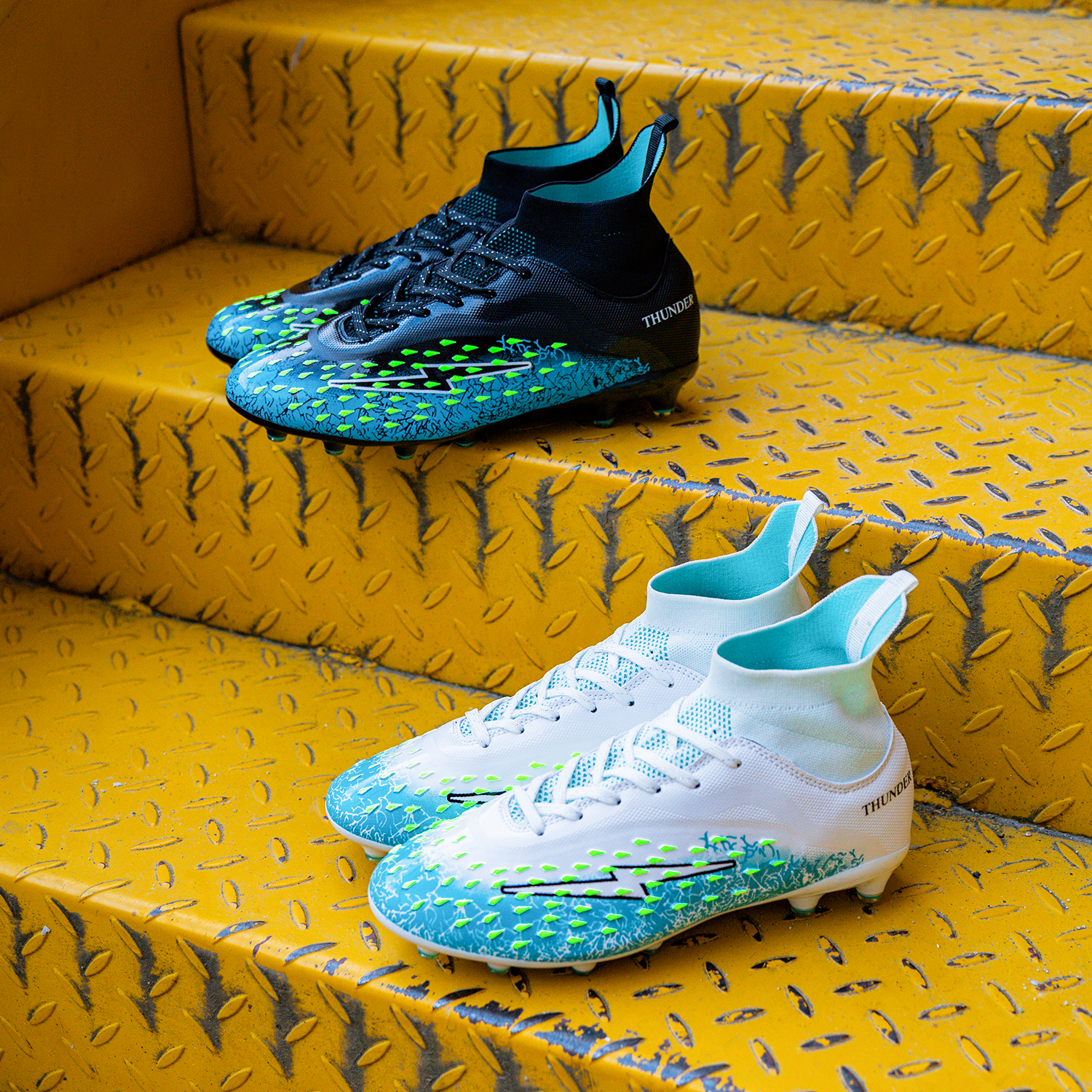
High-peel PU serves as the mandatory baseline for demanding sports categories. For example, manufacturing Soccer Shoes requires intense scuff resistance. Players subject their footwear to extreme shear forces and constant abrasion against turf. Standard PU would delaminate instantly under these conditions. High-peel variants ensure structural integrity during aggressive athletic movements.
Analyze material price bands against expected product lifespans. Cheap standard PU saves money upfront. However, it spikes return rates when shoes peel after three months. Investing in premium microfiber or high-peel PU yields higher returns on investment. It drastically reduces defective units and builds customer loyalty.
Note: Synthetic materials generally do not support heavy stitching constructions like the Goodyear Welt. Needle holes permanently puncture the plastic coating. This causes tearing under pressure. Therefore, synthetic footwear requires specialized cement lasting and strong chemical bonding.
Material degradation remains a primary concern for footwear buyers. Addressing customer skepticism requires understanding the actual chemistry behind synthetic aging.
Buyers often worry about sudden "flaking" or peeling. We must explain the root causes clearly. Premature aging is not a mystery; it is molecular bond breakdown. Two primary culprits drive this decay: hydrolysis and UV exposure.
Hydrolysis occurs when moisture infiltrates the urethane polymer chains. Water molecules gradually break the chemical bonds over time. Heat accelerates this process exponentially. Simultaneously, prolonged UV exposure generates destructive free radicals within the material. These radicals attack the polymer matrix, causing it to harden, yellow, and eventually crack into flakes.
You can prevent this degradation. Ensure your raw material suppliers utilize specific chemical stabilizers during formulation.
Anti-Hydrolysis Agents: These additives protect the polymer chains from moisture degradation. They extend the usable lifespan in humid climates.
UV Absorbers: Chemicals like UV 571 absorb harmful ultraviolet light. They prevent yellowing and maintain material flexibility over time.
Proper Warehousing: Verify the storage conditions at your partner factory. Factories must store raw PU rolls in climate-controlled environments. Hot, damp warehouses pre-degrade materials before cutting even begins.
Best Practice: Request detailed material specification sheets from your manufacturer. Look specifically for hydrolysis resistance test results. Quality suppliers measure this in weeks (e.g., 4 to 8 weeks) under extreme high-heat and high-humidity testing chambers.
Great materials fail without excellent manufacturing execution. You must audit factory floor protocols rigorously.
The manufacturing journey begins in the cutting room. Automated die-cutting machines reduce material waste significantly. They guarantee consistent panel shapes across thousands of units. After cutting, factories perform skiving. Skiving machines thin the edges of the cut PU panels. This step ensures flat, professional seams. Without proper skiving, overlapped joints become bulky and uncomfortable.
Evaluate factory bonding protocols closely. Synthetic PU lacks the natural stretch found in genuine animal hides. Stretching it forcefully over a shoe last causes permanent distortion. Factories must utilize strict temperature controls during cement lasting. They heat the upper gently to increase pliability. Workers apply premium adhesives specifically formulated for non-porous synthetic surfaces. This prevents the upper from separating from the midsole under stress.
Robust quality assurance protocols capture defects before packaging. Demand these minimum testing requirements from your factory partner:
Durability Metrics: Factories use Bally flex testing machines. Your material must survive a minimum of 50,000 flexes at room temperature without visible cracking.
Adhesion Testing: Technicians use a peel-strength tester. They measure the pull-strength required to tear the PU upper from the rubber outsole. Values below 3.0 kg/cm indicate weak bonding.
Visual Inspection: Line workers check for messy glue lines, color inconsistencies, and proper finishing techniques.
Quality inspection protocols ensure the structural integrity and aesthetic finish of synthetic footwear before shipment.
Finding a reliable factory requires more than comparing unit prices on a spreadsheet. You need a structured approach to evaluate long-term manufacturing partners.
Investigate the factory's technical capabilities. Do they utilize advanced prototyping software like 3D modeling? This speeds up the sampling phase immensely. Look for automated computer-stitched machinery on the factory floor. Automated stitching ensures tight batch-to-batch consistency and dramatically reduces human error in complex designs.
Evaluation Criteria | What to Look For | Red Flags to Avoid |
|---|---|---|
Technology | Automated cutting, 3D sampling, computerized stitching. | Entirely manual cutting, outdated hand-drawn patterns. |
Certifications | ISO 9001, BSCI, CE marks. | Expired certificates, refusal to share audit reports. |
Quality Control | In-house testing labs (flexing, peel-strength). | Testing relies entirely on external slow-moving labs. |
Transparency | Allows third-party inspections freely. | Demands full payment before any external inspection. |
Minimum Order Quantities (MOQs) define your financial risk. Standard industry MOQs typically range from 500 to 1000 pairs per colorway. Startups often struggle with these numbers. Negotiate tiered pricing structures instead. Propose a pilot run of 200-300 pairs to test market viability. Factories open to pilot runs demonstrate a willingness to grow alongside your brand.
Even the best factories encounter supply chain disruptions. Proactive buyers build defensive strategies to protect their production timelines.
Always factor raw material procurement into your production schedules. Factories rarely keep massive stocks of specific colored PU rolls. They order them upon receiving your deposit. Local PU suppliers deliver materials in days. Imported premium materials add weeks to your timeline. Map these variables out early to avoid missing seasonal launch windows. Buffer your schedules by at least 15 days.
Maintaining quality over multiple restocks proves difficult. Unscrupulous factories might secretly substitute cheaper standard PU during your third or fourth order. Prevent unauthorized material substitutions by locking in your raw suppliers. Require the factory to specify exact material source codes in the purchase order. Retain a "Golden Sample" in your office. Use it to compare weight, flex, and texture against every new batch received.
Securing a reliable supply of PU Leather Shoes requires much more than simple price shopping. It functions strictly as an exercise in calculated risk management and deep chemical validation.
Take the following steps to optimize your sourcing strategy immediately:
Define your specific product grade requirements based on performance needs, not just visual appeal.
Mandate hydrolysis resistance test reports for any footwear intended for humid climates or intense athletic use.
A: Premium grades treated with UV and anti-hydrolysis agents easily last two to three years under regular use. Standard untreated grades often show peeling or cracking within six to twelve months. Proper storage away from direct heat drastically extends their actual lifespan.
A: Standard PU leather utilizes a basic woven fabric backing coated with a thin polymer layer. Microfiber leather features a complex 3D non-woven microfiber base. This advanced internal structure mimics natural animal collagen fibers, delivering significantly higher tear strength and superior breathability.
A: Yes. Modern high-peel synthetics frequently outperform real leather in specific athletic metrics. They absorb far less water, remain lighter on wet pitches, and require zero break-in periods. However, natural hides still offer unique foot-molding capabilities over extended wear.


