


Views: 0 Author: Site Editor Publish Time: 2026-05-21 Origin: Site


Choosing between PU Leather Shoes and genuine leather involves far more than just comparing the initial price tag. Your decision directly impacts footwear lifespan, daily user comfort, and how often replacements become necessary. Modern manufacturing advancements make synthetic alternatives look incredibly realistic on the shelf. However, their physical properties under mechanical stress remain fundamentally different from natural animal hides. This guide breaks down the underlying material science behind both popular options. We will explore daily performance realities, environmental footprints, and practical maintenance requirements. You will learn how to accurately authenticate materials, avoid common purchasing mistakes, and choose the perfect footwear for your exact lifestyle needs.
Material Lifespan: Genuine leather can withstand millions of flexing motions and lasts for years, whereas PU leather typically begins to peel or crack within 2 to 5 years of regular use.
Comfort & Breathability: Natural leather is porous, allowing moisture (sweat) to escape. PU leather contains plastic polymers that trap heat and moisture.
Cost Efficiency: PU leather shoes offer a lower barrier to entry and upfront savings, but genuine leather yields a higher return on investment (ROI) over its total lifecycle due to its durability.
Usage Context: High-stress applications, such as soccer shoes, expose the starkest differences in stretch, breathability, and material resilience between the two.
To evaluate footwear accurately, you must understand the foundational materials used during manufacturing. Factories use vastly different processes to create synthetics versus natural hides. These structural differences dictate how the footwear will perform in the real world.
PU Leather (Polyurethane): Manufacturers create this by applying a thermoplastic polymer coating over a fabric backing. They typically use polyester or cotton for this base layer. High-quality, 100% PU leather remains entirely synthetic. It serves as a highly popular vegan-friendly alternative.
Genuine Leather: Producers derive this organic material from animal hides, most commonly cowhide. They tan the raw hides chemically or naturally to prevent decay. You must note that the term "Genuine Leather" often acts as a specific industry grade. It typically ranks below premium Full-Grain and Top-Grain options. This grading means it is structurally weaker than top-tier hides. Still, it retains the natural porous characteristics of animal skin.
Assessing physical characteristics helps you predict daily footwear performance accurately. A simple feature comparison reveals stark contrasts between synthetic coatings and natural hides. You can use the chart below to quickly evaluate which material suits your daily routine.
Evaluation Factor | PU Leather Shoes | Genuine Leather Shoes |
|---|---|---|
Durability | Low to Moderate (Prone to surface peeling and scuffing). | High (Highly resistant to tearing and punctures). |
Breathability | Poor (Traps heat, leading to sweaty feet). | Excellent (Natural pores allow moisture to evaporate). |
Flexibility & Fit | Rigid (Retains original shape, minimal stretch). | Adaptive (Molds to the wearer's foot shape over time). |
Water Resistance | High (Naturally repels water, easy to wipe clean). | Moderate (Absorbs moisture without proper treatment). |
Maintenance | Low-effort (Requires only a damp cloth). | High-effort (Requires regular conditioning and polishing). |
Let us examine these operational differences closer. Durability heavily favors natural hides. Synthetics look pristine initially but struggle against concrete scuffs. Breathability also highlights a massive structural gap. Natural pores allow sweat to escape efficiently. Plastic polymers trap body heat entirely. This trapped heat causes uncomfortable, sweaty feet during long work shifts.
Fit changes drastically over time as well. Natural hides adapt slowly to your unique foot geometry. Synthetics remain structurally rigid from day one. You cannot stretch them out easily. Water resistance offers one clear operational win for synthetics. They repel heavy rain effortlessly. Natural hides require frequent wax conditioning to survive wet outdoor conditions.
The true test of material quality happens during ongoing physical stress. We see major performance differences once you start walking daily. Your natural biomechanics force the shoe materials to bend, fold, and stretch continuously.
The Break-in Period: Natural hides possess incredible organic elasticity. Your body heat and daily friction warm the material. The hide gradually stretches. It eventually conforms perfectly to your foot shape. Synthetics lack this structural memory completely. They maintain their rigid factory mold permanently. They will never stretch to accommodate wide feet or bunions.
Flexing Action: Every step creates a deep crease across your toe box. High-grade natural hides withstand millions of these flexing actions. They rarely suffer catastrophic structural failure. A plastic polyurethane coating eventually fatigues from this repeated bending. This fatigue results in highly visible surface cracking and flaking.
The Hydrolysis Risk: Synthetics harbor a lesser-known chemical vulnerability called hydrolysis. Polymer compounds become highly unstable if left unworn in a dark closet. Ambient humidity attacks the synthetic layers over time. The chemical bonds break down silently. The shoes can spontaneously crumble or disintegrate the next time you wear them.
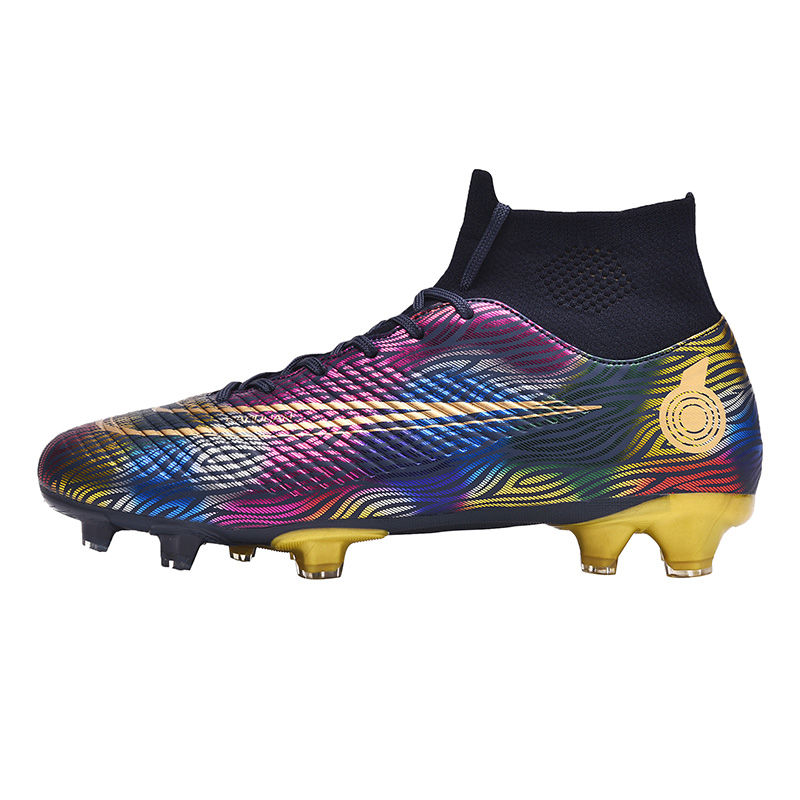
High-stress athletic footwear often utilizes specialized synthetic coatings to completely block moisture on wet terrain.
Athletic footwear magnifies the performance gap between materials significantly. Soccer Shoes provide the perfect high-stress case study. The extreme physical demands of the sport push both natural and synthetic options to their absolute limits.
Premium cleats often utilize kangaroo or high-grade calfskin. These natural materials provide a noticeable dampening effect on the ball. This unique effect offers athletes superior touch and control during fast dribbling. The organic material molds tightly to the player's foot. It acts almost exactly like a protective second skin, eliminating clumsy internal foot slippage.
Competitive matches demand intense, continuous physical exertion. Natural breathability prevents excessive moisture buildup inside the boot. Synthetic cleats feel noticeably lighter out of the box. They also naturally repel water. This waterproofing makes them ideal for playing on wet, muddy grass. However, they trap internal heat aggressively. This trapped heat often leads to severe blistering and extreme discomfort during a grueling 90-minute game.
Sudden stops, quick sprints, and sharp pivots apply extreme lateral forces to the boot. These violent forces push synthetic materials to their absolute tearing threshold much faster than natural options. Organic hides resist this lateral tearing exceptionally well. They endure aggressive pitch conditions for multiple seasons, provided the athlete maintains them properly.
Evaluating material authenticity ensures you get your expected return on investment. You must verify materials before making an expensive personal purchase. You should also audit new manufacturing suppliers rigorously. Marketing labels frequently mislead unsuspecting buyers.
Place a single drop of water on the upper surface of the footwear. Natural materials will absorb the droplet slightly after a few seconds. This moisture absorption darkens the affected area temporarily. Synthetics remain entirely impermeable. The water droplet will simply bead up and roll off the plastic surface instantly.
Machine-manufactured synthetics feature a completely uniform, stamped pattern. The embossed texture repeats perfectly across the entire surface area. You will not find any structural flaws. Natural hides showcase highly irregular, chaotic grain structures. They feature tiny imperfections, stretch marks, and pores. Each pair looks slightly unique, much like human fingerprints.
Natural hides emit a very distinct, rich, earthy smell derived from the tanning process. Synthetics often release a harsh chemical or burnt plastic odor. Some modern manufacturers deliberately use artificial leather fragrances to mask this chemical smell. However, you can still usually detect the underlying plastic scent if you inspect the footwear closely.
Your final footwear decision depends heavily on budget constraints, ethical preferences, and planned daily activities. There is no universally perfect material. You must align the shoe's physical properties with your specific lifestyle demands. Keep these action-oriented steps in mind:
Assess your climate: Opt for high-quality synthetics if you frequently walk through heavy rain, snow, or muddy terrain where waterproofing is paramount.
Prioritize fit over price: Invest in natural animal hides if you possess wide feet that require long-term material adaptation and stretching.
Audit your closet humidity: Keep synthetic pairs out of damp basements to actively prevent premature chemical hydrolysis and crumbling.
Examine the grain closely: Always perform a quick visual and water test before paying premium prices for supposed authentic materials.
A: No. Once the top polyurethane layer cracks and peels away from the fabric backing, the structural integrity is compromised. Unlike genuine leather, which you can easily sand and condition, peeled synthetic material is practically unrepairable. You must replace the footwear entirely.
A: No. Polyurethane has very little natural elasticity. If a synthetic shoe feels uncomfortably tight out of the box, it will remain tight forever. It does not possess the organic "break-in" qualities of natural animal hide. You should always buy your exact size immediately.
A: You should wipe synthetics clean with a damp cloth and mild soap. Harsh chemicals quickly degrade the artificial plasticizer. Genuine leather requires specialized saddle soap for deep cleaning. You must follow this up with a hydrating conditioner or cream to prevent the hide from drying out and cracking.


