


Views: 0 Author: Site Editor Publish Time: 2026-07-24 Origin: Site


Have you ever slipped during a crucial sprint on the pitch? Or perhaps you felt a sharp, alarming tweak in your knee after a rapid pivot? Selecting the right Soccer Shoes is not just about aesthetics or brand loyalty. It is a critical functional decision driven directly by your playing surface.
Mismatching your footwear to the pitch brings serious, immediate risks. You face severe joint injuries. You instantly void expensive product warranties. You also suffer from drastically reduced traction when you need it most. Many players buy boots based purely on colorways or professional player endorsements. They completely ignore the soleplate. This oversight leads to torn ligaments and ruined equipment.
This guide provides a clear, evidence-based framework. We will help you match specific soleplates to their intended playing environments. You will learn exactly how different studs interact with dirt, synthetic fibers, and concrete. By the end of this article, you will understand how to maximize both your athletic performance and your physical safety on the field.
Firm Ground (FG): Designed exclusively for natural, dry grass; features long, molded studs.
Soft Ground (SG): Built for wet, muddy natural grass; utilizes removable metal studs.
Artificial Grass (AG): Engineered for modern 3G/4G synthetic pitches; features shorter, hollow, and more numerous studs to distribute weight and prevent excessive grip.
Turf (TF): Features a densely packed rubber nub outsole; ideal for shallow, carpet-like artificial turf and hard synthetic surfaces.
Indoor (IC/IN): Flat, non-marking rubber outsoles for wooden courts or concrete.
Mismatching footwear (e.g., FG on AG) exponentially increases the risk of ACL injuries and premature shoe breakdown.
Surface compatibility dictates every movement you make on the field. You must understand the underlying mechanics to appreciate why soleplates differ so drastically.
Sports medicine professionals constantly emphasize the grip-to-release ratio. We must look at the biomechanics of rotational traction. To accelerate quickly, shoes must grip the surface aggressively. They must bite into the ground. However, they must also release smoothly during fast pivots. If your soleplate locks into the ground completely, the rotational force travels directly upward. It hits your ankle. It hits your knee. This dangerous torque tears crucial ligaments.
Manufacturers engineer soleplates for highly specific friction levels. Natural grass offers natural lubrication through moisture and loose dirt. Synthetic fields lack this moisture entirely. They generate intense friction and high heat. Using natural grass cleats on artificial surfaces melts the plastic. The extreme friction snaps long studs completely. Leading manufacturers carefully inspect damaged returns. They easily recognize friction damage. This misuse instantly voids manufacturer warranties. You lose your money immediately.
Stud length and shape dictate your energy return. They define your stability on specific grounds. A well-matched boot helps you sprint faster. It keeps you balanced during aggressive tackles. You waste less energy slipping or struggling to pull your foot out of deep mud.
Note: Wearing Firm Ground (FG) cleats on Artificial Grass (AG) is a massive mistake. It is a leading cause of stud snapping. It significantly increases knee torque. This specific mismatch frequently leads to severe ligament damage. Never ignore this warning.
Natural grass pitches vary wildly depending on your local climate. Weather conditions directly dictate the state of the soil. You must adapt your footwear to these changing elements.
Firm Ground models rule dry, sunny days. They feature non-removable plastic. Some models use hard rubber studs instead. Brands mold these directly into the base of the boot. You will see blade shapes or conical shapes. Engineers design these to penetrate natural soil efficiently. They slice into the dirt without getting stuck.
Ideal Scenario: You should wear them on well-maintained, dry to slightly damp natural grass pitches. They are the standard issue boot for most traditional outdoor leagues.
Soft Ground models handle heavy, wet weather. They boast longer, screw-in metal studs. You typically see a standard 6-stud configuration. Four sit at the forefoot. Two sit at the heel. They are built for maximum penetration. They grip soft, yielding environments effortlessly.
Ideal Scenario: Wear them on waterlogged grass. Wear them on heavily muddied fields. They dominate heavily rained-on natural grass where standard plastic would slide.
Review the table below to see how these two natural grass titans compare across key dimensions.
Feature | Firm Ground (FG) | Soft Ground (SG) |
|---|---|---|
Traction Level | Moderate bite; smooth release on dry soil. | Aggressive bite; prevents slipping in deep mud. |
Stud Type | Molded plastic or hard rubber (bladed/conical). | Removable, screw-in metal (usually aluminum). |
Maintenance Requirements | Low. Wash dirt off after use. | High. Must tighten metal studs with a wrench before games. |
League Legality | Universally accepted in all outdoor leagues. | Often banned in youth and amateur leagues for safety. |
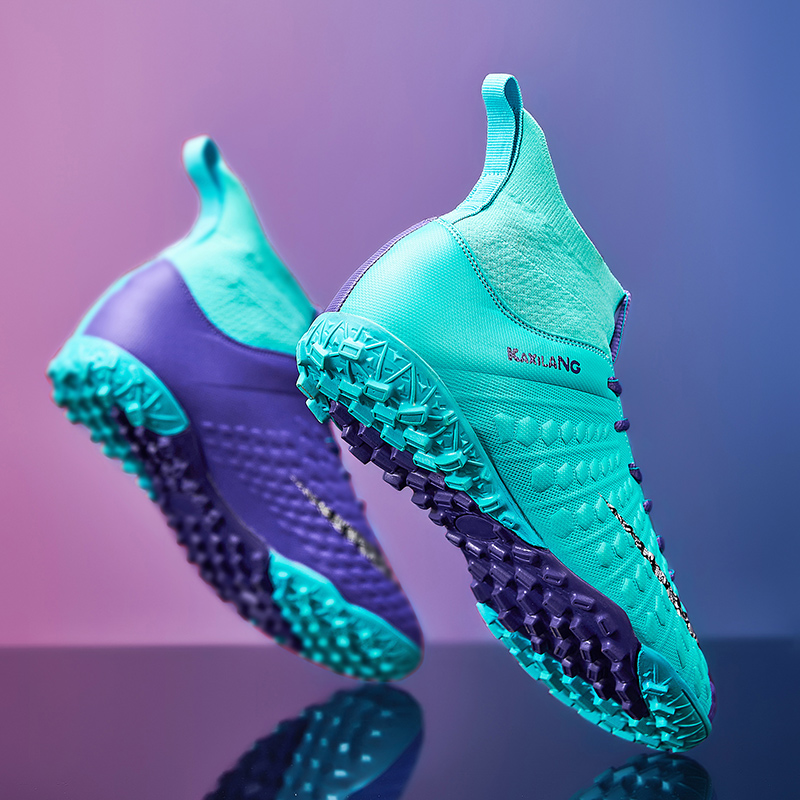
Matching your boot to the correct surface ensures optimal traction and protects the structural integrity of the soleplate.
Synthetic pitches confuse many players. People often use the terms interchangeably. However, we must clarify the distinct difference between modern artificial grass and older turf formats.
Modern 3G and 4G pitches represent Artificial Grass. They use deep synthetic blades. They fill the gaps using rubber crumb infill. This black rubber mimics the depth and give of real dirt. Older Turf pitches look completely different. They feature shallow, carpet-like material. Facilities often lay this green carpet directly over hard concrete pads. They offer almost zero depth.
These boots handle modern, deep synthetic fields. They use conical, hollowed-out studs. These shorter studs release easily from tough synthetic fibers. This design prevents your foot from getting trapped during a turn. Brands also use reinforced soleplates here. These thicker plates handle the intense high heat generated by turf friction. They prevent the boot from melting. They prevent the soleplate from separating from the upper.
Turf shoes handle shallow carpets and hard outdoor synthetics. They feature dimpled, low-profile rubber outsoles. They lack traditional long studs entirely. Instead, they use dozens of densely packed rubber nubs. They provide essential shock absorption. They protect your knees from the concrete underneath. They grip the carpet surface without trying to penetrate the ground.
Tip: If your local facility has a strict "no cleats" rule for its synthetic fields, Turf (TF) shoes are the standard compliant option. They will still provide superior lateral grip compared to standard Sports Shoes.
Hard court environments demand highly specialized outsoles. You must abandon studs completely when moving indoors.
The surface definition is simple but unforgiving. You play on polished wooden gymnasium floors. You play on smooth concrete. You play on rough asphalt. These surfaces offer zero penetration depth. Your shoe must generate friction entirely across the top layer.
Indoor models use completely flat rubber gum outsoles. They use non-marking materials exclusively. This prevents ugly black scuffs on expensive polished gym floors. They feature intricate tread patterns. You will frequently see herringbone or honeycomb designs. These patterns maximize surface area contact. They deliver instant grip on completely flat surfaces. They allow you to stop on a dime.
We must strongly contrast Indoor shoes with Turf shoes. This remains a common point of confusion. Indoor shoes completely lack rubber nubs. You absolutely need those nubs for carpet-turf traction. If you wear flat indoor shoes on synthetic grass, you will slide endlessly. You cannot grip artificial fibers with a flat gum sole. Conversely, wearing nubbed turf shoes on a wooden gym floor feels slippery and unstable.
Many players split their time across different fields. Buying multiple pairs of high-end boots gets expensive fast. The Multi-Ground (MG) compromise appeals heavily to these athletes.
It is a hybrid soleplate. It features a specific mix of stud lengths. It blends different stud shapes together. Designers engineer them to work adequately on natural dry grass. They also engineer them to handle modern artificial grass safely. They bridge the gap between FG and AG models.
They are highly cost-effective. They serve players who alternate playing environments weekly. Sometimes you play on natural grass on Tuesdays. Then you play on synthetic pitches on Thursdays. An MG boot eliminates the need to buy two separate pairs. You save money immediately. You also save space in your gear bag.
You must accept the "master of none" trade-off. They perform adequately everywhere but excel nowhere. They feel slightly heavier than dedicated boots. They offer less aggressive traction on natural grass. They also carry a slightly higher injury risk on deep AG compared to dedicated AG boots. They simply cannot match the specialized performance of a single-surface soleplate.
They are ideal for casual players. They suit budget-conscious buyers perfectly. They are especially great for youth athletes. Children rapidly outgrow footwear. Buying one versatile pair makes tremendous financial sense for parents.
How do you choose the right Sports Shoes? You must avoid impulse buying. Follow this strict three-step evaluation to make the right purchase.
Look at your upcoming season schedule. Identify the surface where you play 80% of your matches. Optimize your primary purchase specifically for that ground. Do not buy SG boots just because you expect one rainy tournament weekend. Buy for your everyday reality. If you train and play mostly on modern turf, invest heavily in a premium AG boot.
Rules vary wildly between different leagues and sports complexes. Check your local league rules carefully before spending money.
Many amateur outdoor leagues strictly ban metal studs (SG). They view them as a severe danger to other players during tackles.
Indoor arenas routinely ban hard plastic cleats (FG). They do this to protect their expensive synthetic turf mats from tearing.
Some casual indoor leagues only allow completely flat (IC) soles.
The upper material must match your playing surface closely. Different materials react differently to environmental stress.
Leather Uppers: They offer incredible touch and mold to your foot. However, leather absorbs water heavily on wet SG pitches. It stretches and becomes heavy.
Synthetic Uppers: They resist water absorption perfectly. They maintain their shape in the rain. They are also much easier to clean when dealing with black rubber-infill from AG fields.
Knit Materials: They provide a sock-like fit. However, they require careful maintenance to prevent dirt from embedding deep into the fabric.
Let us summarize this critical decision framework. The outsole remains the most important component of your footwear. The bottom of the boot dictates your physical safety. It dictates your sprint speed. It dictates your agility.
Prioritizing surface compatibility over brand aesthetics brings massive benefits. You protect your joints from devastating, season-ending injuries. You also protect your financial investment from rapid degradation and voided warranties. Never buy a boot just because it looks incredible in a photograph. Buy it because the soleplate fits your pitch perfectly.
Evaluate your league's primary pitch type today. Check your local facility rules immediately. Verify your playing surface requirements before adding any product to your cart. Make a smart, functional choice to keep yourself playing safely all season long.
A: No. While common, doing so generates excessive traction that prevents the foot from pivoting smoothly, severely increasing the risk of knee and ankle injuries. It also voids the shoe's warranty.
A: Turf shoes feature dozens of small, rubber nubs for grip on carpet-like artificial turf. Indoor shoes have completely flat, patterned rubber outsoles designed exclusively for hard, flat surfaces like wood or concrete.
A: If you split your time evenly between natural firm grass and artificial grass, consider a Multi-Ground (MG) boot. Alternatively, investing in one pair of FG and one pair of AG/TF shoes is the safest long-term approach.
A: Long, hard plastic (FG) or metal (SG) studs can tear up the underlying fabric of shallow synthetic turf mats, causing expensive facility damage and creating tripping hazards.


