


Views: 0 Author: Site Editor Publish Time: 2026-06-12 Origin: Site


The performance, longevity, and overall cost of Soccer Shoes rely heavily on their exact material composition. You cannot leave this foundational choice to chance. Players constantly demand maximum agility, while product developers seek highly reliable manufacturing scales. Navigating these competing needs presents a significant challenge for buyers and athletes alike.
Whether evaluating a massive purchase for a professional team or determining the material makeup for a new line of Sports Shoes, the stakes remain incredibly high. Choosing between traditional leather, advanced synthetics, and modern knits requires deep industry knowledge. You must successfully balance overall weight, tactile touch, structural durability, and production scalability. Buyers often struggle to match specific athletic demands against uncompromising manufacturing realities.
This guide provides a rigorous, objective comparison of PU, TPU, Knit, and Leather. You will discover an evidence-based framework designed to streamline your material selection process. We will help you align specific performance outcomes directly to your distinct budget constraints and operational needs.
Leather offers unmatched moldability and ball control but requires significant break-in time and is susceptible to water retention.
PU (Polyurethane) provides a highly scalable, cost-effective synthetic alternative with excellent water resistance and structural memory.
TPU (Thermoplastic Polyurethane) delivers superior abrasion resistance and elasticity, making it ideal for high-wear zones and outsoles.
Knit materials dominate the premium lightweight category, offering a bespoke, sock-like fit, but depend heavily on secondary synthetic coatings for durability.
The optimal choice depends on the specific use case: agility/speed (Knit/TPU), comfort/touch (Leather), or high-volume durability (PU).
Modern athletes demand incredibly lightweight footwear to maximize speed. Lighter footwear directly improves player agility and reduces muscular fatigue over a grueling 90-minute match. However, manufacturers cannot simply strip away materials to shed weight. They must maintain high tensile strength. Players execute explosive, high-impact lateral movements continuously. If the upper lacks sheer strength, it will tear or overstretch under pressure. You immediately lose critical foot lockdown and joint stability.
Tactile feedback heavily influences elite ball control. The thickness and density of your upper material dictate raw energy transfer. They directly alter ball friction upon impact. Extremely thin materials provide a sharp, barefoot sensation preferred by fast wingers. Conversely, thicker materials dampen the impact force. They offer the cushioned control favored by central midfielders.
Environmental resilience stands as another major performance factor. Wet weather aggressively punishes poor material choices. Natural fibers absorb heavy rain quickly. They suffer severe degradation, lose vital shape retention, and experience massive weight gain. A waterlogged shoe rapidly ruins player speed and shot accuracy.
Implementation realities dictate our final choices. A flawless, indestructible, ultra-light material simply does not exist. Every engineering option involves a calculated compromise. You must consistently weigh upfront cost against expected lifespan and elite performance output.
Note: For B2B buyers and product developers, material consistency across different production batches is a critical success metric; synthetic materials generally offer tighter quality control tolerances than natural hides.
Natural leather features a complex, interwoven cellular structure. This unique biological makeup allows it to stretch organically. It conforms precisely to the distinct contours of any human foot. K-Leather (Kangaroo) dominates the premium footwear tier due to an incredibly high strength-to-weight ratio. It remains thin yet exceptionally strong. Calfskin provides a slightly thicker, highly durable alternative for players needing extra foot protection.
The performance advantages of natural hides remain legendary among professionals. Players revere leather for superior ball cushioning and natural touch. The porous nature of the hide ensures excellent breathability during hot matches. Once you successfully navigate the initial break-in period, you achieve a truly bespoke fit. The footwear essentially acts like a second layer of protective skin.
However, inherent risks and strict limitations exist. High water absorption rates remain the biggest structural flaw. Your shoes become noticeably heavier and sluggish in wet conditions. Furthermore, you must perform consistent, dedicated maintenance. Applying leather food or mink oil prevents the hide from drying out and cracking. Over-stretching also happens over time. Repeated wetting and drying cycles expand the leather permanently. This ultimately leads to a dangerous loss of lockdown stability during sharp lateral turns.
Tip: When sourcing leather for sports shoes, carefully monitor regional compliance and import restrictions; the shift toward sustainable and vegan alternatives is rapidly shrinking the market for exotic natural leathers.
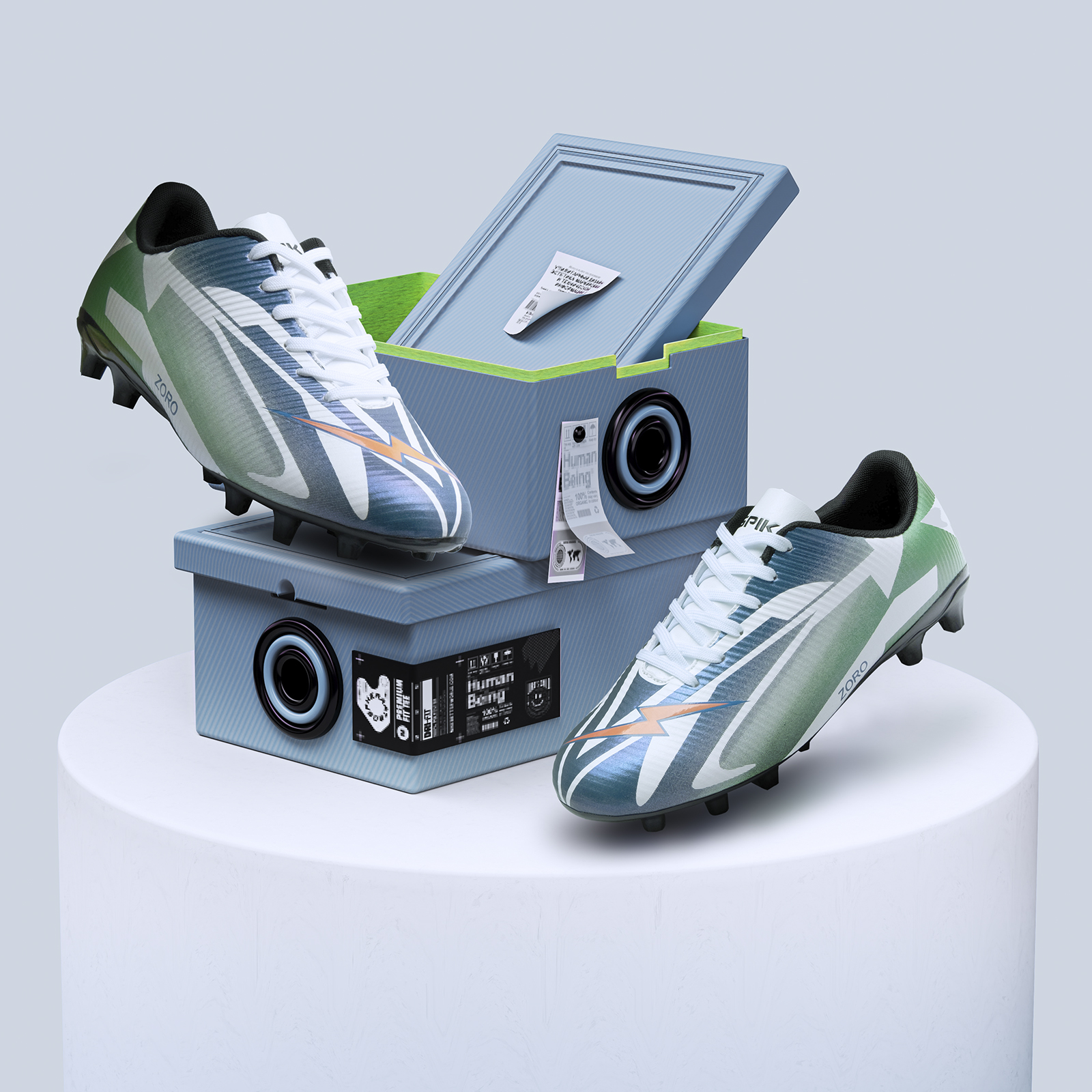
Premium soccer shoe designs often combine classic materials with modern structural support for peak performance.
Polyurethane (PU) represents a massive leap in functional footwear technology. It is a highly engineered synthetic polymer. Chemists explicitly designed it to mimic leather's soft, responsive feel. Crucially, it achieves this without suffering from debilitating water absorption. Out-of-the-box readiness entirely defines PU uppers. You experience zero painful break-in time. Structural shape retention remains consistently excellent season after season. Furthermore, the overall unit cost sits much lower than premium natural hides.
Thermoplastic Polyurethane (TPU) integration solves entirely different engineering challenges. TPU acts as a highly elastic, transparent, and incredibly durable compound. Manufacturers use it primarily for foundational, high-stress components. You will find it extensively in soleplates, traction studs, and external heel counters. Occasionally, engineers weave TPU threads directly into the upper fabrics. This deliberate integration provides extreme abrasion resistance in notorious high-wear zones.
The core advantages of TPU are substantial and measurable. It delivers exceptional resistance to splitting or cracking under extreme pressure. Severe temperature fluctuations do not degrade its structural integrity easily. More importantly, TPU provides exceptionally high energy return. When a player flexes their foot, the stiff soleplate snaps back forcefully. This mechanical action actively propels the athlete forward.
Note: PU and TPU allow manufacturers to leverage automated cutting and molding processes, significantly reducing labor costs and material waste compared to grading and cutting natural leather.
Engineered knit completely disrupted the sports footwear industry upon introduction. Brands utilize sophisticated, high-strength synthetic yarns. They weave these yarns continuously using advanced, computer-controlled looms. This highly precise manufacturing principle creates a seamless, one-piece upper shell.
The resulting performance outcomes are dramatic on the pitch. This manufacturing style entirely eliminates overlapping materials. Heavy seams disappear, drastically reducing the overall weight profile. Internal friction points vanish completely, which effectively prevents painful blisters. Players experience unprecedented flexibility and a true barefoot striking sensation.
However, you must thoroughly understand the "coating" reality. Raw knit fabrics offer absolutely zero water resistance. They provide minimal foot protection against impact. Manufacturers must fuse the yarn layer carefully before final assembly. They apply a micro-thin layer of PU or specialized silicone directly over the knit. Brands frequently market this chemical treatment as "all conditions control". This vital synthetic coating maintains overall structural integrity and provides necessary friction for ball grip.
Durability risks remain noticeably high in this category. Knit structures are highly susceptible to tearing under duress. If an opponent steps aggressively on the upper wearing sharp metal studs, the yarn can sever instantly. Consequently, knit models generally suffer a much shorter overall lifespan compared to traditional leather or thick PU alternatives.
We have compiled a comprehensive comparison matrix below. Use this clear framework to facilitate rapid, accurate decision-making. It breaks down the critical dimensions dictating on-pitch success and manufacturing viability.
Material Type | Touch & Feel | Weight Profile | Durability & Lifespan | Water Resistance | Cost Tier |
|---|---|---|---|---|---|
Premium Leather | Excellent / Dampened | Heaviest | High (if maintained) | Poor | Mid to Premium |
PU (Polyurethane) | Moderate / Consistent | Mid-Weight | Moderate to High | Excellent | Entry to Mid |
Coated Knit | Barefoot / Sharp | Lightest | Lowest | Good | Premium |
TPU Components | N/A (Structural) | Mid-Weight | Highest | Excellent | Variable |
Understanding the dimensions covered in this matrix helps isolate your exact needs:
Touch/Feel: Leather provides an excellent, dampened touch ideal for control. Knit delivers a sharp, responsive barefoot sensation. PU offers moderate, highly predictable feedback.
Weight: Knit strictly ranks as the lightest option available. PU and TPU fall securely into the middle tier. Leather stands as the heaviest upper material.
Durability/Lifespan: TPU scores the highest for sheer mechanical toughness. Leather lasts for years if carefully maintained. PU provides a solid, moderate lifespan. Knit degrades the fastest under heavy tackling.
Water Resistance: PU and TPU repel water completely. Chemically coated knit holds up well in damp conditions. Leather performs poorly in heavy rain.
Cost Tier: PU heavily dominates the entry and mid-level consumer markets. Leather occupies the respected mid-to-premium space. Knit strictly commands premium retail pricing.
Selecting the ideal material requires matching the physical properties to the player's tactical role and environment. Follow this structured decision framework to narrow down your choices efficiently.
For Agility and Speed Profiles: Prioritize Knit uppers paired securely with TPU outsoles. This advanced combination strips away all unnecessary bulk. You achieve minimal weight alongside maximum foot lockdown. It perfectly suits dynamic wingers and forwards relying heavily on explosive acceleration.
For Control and Comfort: Opt for Premium Leather construction. You will achieve the absolute best material moldability available. The natural touch cushioning remains completely unmatched by synthetics. Central midfielders and defensive anchors often prefer this precise tactile feedback and superior joint protection.
For High-Volume, All-Weather Use: Select PU synthetic uppers. They offer the most reliable, consistent performance across all climates. Deep mud and heavy rain will not penetrate the tough outer shell. You benefit from zero required maintenance, making them completely ideal for rigorous daily training sessions.
Tip: If you are managing inventory for retail or institutional buyers, PU-based soccer shoes offer the best ROI due to lower return rates associated with sizing stretch and environmental damage.
The "best" material remains entirely subjective. It is defined strictly by the wearer's specific performance priorities and operational budget. You must inevitably decide whether absolute minimum weight matters more than a cushioned, premium touch. Financial constraints will also heavily guide your final sourcing outcome.
Material blending represents the undisputed current industry standard. Manufacturers routinely combine lightweight Knit collars with supple Leather forefoots. They anchor these complex hybrid designs to ultra-stiff TPU soleplates. This intelligent engineering strategy mitigates individual material weaknesses beautifully.
Evaluate your typical playing conditions, foot shape, and maintenance habits before making a final investment. Keep these actionable next steps in mind:
Identify your primary playstyle before prioritizing weight over durability.
Accept that natural materials require mandatory, consistent post-match care.
Embrace hybrid constructions to maximize the unique benefits of multiple materials.
Match your soleplate flexibility directly to your primary playing surface.
A: PU offers superior water resistance, exceptional shape retention, and requires absolutely zero maintenance. However, natural leather remains completely unmatched for achieving a custom, molded fit. It also provides a distinctly soft, cushioned touch. Your optimal choice depends entirely on whether you prioritize all-weather durability or bespoke comfort.
A: Expect them to last one to one and a half intense seasons. The vital thin PU coating usually wears down first. Once this protective coating fails, the raw yarn becomes highly vulnerable. High-impact tackles and sharp metal studs can quickly compromise the exposed knit structure.
A: TPU delivers an incredibly high strength-to-weight ratio. It retains superior structural flexibility under extreme stress. This elasticity prevents the soleplate from snapping safely. When cleats grip the turf, immense rotational torque occurs. TPU effectively absorbs this intense energy and returns it mechanically to the player.


