


Views: 0 Author: Site Editor Publish Time: 2026-03-11 Origin: Site


Many buyers focus on design, color, or brand image before asking the most important question about Cycling Shoes: how should they actually fit? Unlike casual sneakers, cycling footwear is built for repetitive motion, direct pedal contact, and long-duration stability. Appearance may catch attention first, but fit determines comfort, control, and long-term satisfaction. Understanding cycling shoes fit, size, stiffness, and compatibility is the key step that reduces returns, prevents discomfort, and improves the overall riding experience.
Cycling shoes should feel snug around the midfoot and heel. This does not mean tight or restrictive, but supportive. A properly fitted shoe holds the foot in place during each pedal stroke. When the foot remains stable, pedaling feels smoother and more controlled.
A snug midfoot wrap reduces unnecessary internal movement. For riders who cycle regularly, this consistent support can make a noticeable difference over time.
Loose cycling shoes allow the foot to slide slightly inside the shoe. Even minor movement becomes more pronounced over repeated pedaling. Riders may notice instability, reduced confidence during stronger efforts, or uneven pressure across the forefoot.
If a shoe feels comfortable but not secure, it may not be the right fit for cycling-specific use.
Overly tight shoes restrict natural foot expansion during riding. Feet tend to swell slightly during longer sessions. If the fit leaves no room for adjustment, discomfort may develop.
Cycling shoes should provide firm support without pressure points. Balance between hold and comfort is essential.
There should be a small amount of space at the front of the shoe. Toes should not press against the tip, but they should not move excessively either. Proper toe room allows natural foot expansion during riding.
The heel must stay in place when pedaling. If the heel lifts noticeably with each stroke, the shoe may be too large or improperly shaped for the foot. A stable heel improves energy consistency and reduces friction inside the shoe.
Cycling involves repetitive forward motion. The arch and midfoot area need structured support. A well-designed cycling shoe stabilizes this region without excessive compression. Riders should feel evenly supported rather than squeezed.
Asterism incorporates carefully engineered internal structures to ensure balanced support across these critical areas, combining stability with comfort for varied riding needs.
Cycling shoes generally follow standard sizing, but variations can occur between brands and models. Riders who fall between sizes should consider how they plan to use the shoes. For longer rides, slightly more room may enhance comfort. For performance-focused riding, a closer fit may provide better stability.
Feet often expand slightly later in the day. Trying on or evaluating size during this period provides a more realistic fit assessment, especially for riders planning extended sessions.
Cycling shoes should feel properly supportive from the beginning. While materials may soften slightly with use, relying on break-in to solve sizing problems can lead to disappointment. Correct cycling shoes size selection from the start minimizes risk.
Sole stiffness directly influences pedaling feel. High-stiffness models reduce flex under pressure, creating a direct connection between foot and pedal. Riders focusing on speed or longer road sessions often prefer this characteristic.
Not every rider requires maximum rigidity. Moderate stiffness can provide sufficient support while maintaining comfort for walking or casual riding. Commuters and recreational cyclists often appreciate this balance.
Consider how long and how intensely you ride. Occasional short rides may not demand aggressive stiffness. Regular training sessions or long-distance cycling may justify a firmer platform.
Asterism designs cycling shoes with varied sole constructions to match different usage scenarios, ensuring riders can align stiffness with actual riding needs rather than trends.
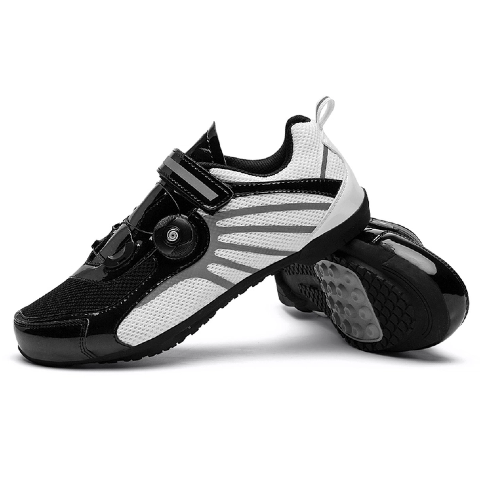
Dial-based systems allow fine-tuned tightening and quick adjustments. Riders who value precision often prefer this mechanism. It enables easy modification even during a ride stop.
Strap systems offer straightforward functionality. They are easy to operate and suitable for entry-level or casual cycling shoes. Simplicity and reliability make them attractive for daily riders.
Lace closures distribute pressure evenly across the upper. They can provide comfortable tension but may require more time to adjust. Some riders prefer lace systems for their balanced feel.
Selecting a closure system depends on how often adjustments are required and how much convenience matters.
Two-bolt systems are common for mountain and commuter cycling shoes. They are often recessed into the sole for better walkability. Three-bolt systems are typically used for road cycling and emphasize stable pedal contact.
Understanding compatibility before purchasing prevents unnecessary returns and setup issues.
Road cycling shoes prioritize efficiency and often feature exposed cleats. Mountain or commuter models balance ride performance with walking practicality.
Choosing the wrong cleat type can limit usability, especially for riders who frequently walk.
Matching cycling shoes to pedal systems is essential. Riders should verify their existing pedal type before ordering. Clear product specifications reduce confusion and improve satisfaction.
Standard length is not the only factor. Foot width and internal volume affect comfort significantly. A narrow shoe may feel restrictive even if the length is correct.
Breathable materials enhance airflow during longer rides. Riders in warmer climates or indoor environments benefit from well-ventilated uppers.
Cold-weather riding may require slightly thicker socks, influencing fit considerations. Riders should evaluate seasonal variations before finalizing size.
Factor | What to Check | Why It Matters |
Fit | Snug midfoot, secure heel, slight toe room | Stability and comfort |
Size | True size or adjust if between sizes | Reduces fit errors |
Sole Stiffness | Low, medium, or high | Matches riding intensity |
Closure | Dial, strap, or lace | Influences adjustment control |
Cleat Compatibility | 2-bolt or 3-bolt | Must match pedal system |
Upper Material | Breathable and durable | Impacts comfort |
QuanZhou Asterism Import and Export Co., Ltd., located in Jinjiang City, integrates design, development, and production to deliver functional footwear. Its cycling shoe range reflects attention to sole construction and balanced stiffness.
Asterism emphasizes reliable fastening systems and breathable uppers. These elements contribute to stable fit and comfort across various riding conditions.
Beyond standard models, Asterism provides customization services for branding, materials, and structural preferences. This flexibility supports distributors and retailers seeking differentiated offerings.
The right pair of cycling shoes is not defined by appearance alone but by how well it fits, supports, and matches the rider’s pedal system and riding habits. By focusing on cycling shoes fit, size accuracy, stiffness, and compatibility, riders reduce guesswork and improve long-term comfort. Asterism develops performance-oriented bike cycling footwear that balances structure, breathability, and adaptability across multiple riding scenarios. For detailed specifications or customization discussions, contact us to explore models designed to meet your market or personal riding requirements.
Q1: How tight should cycling shoes feel?
Cycling shoes should feel snug and secure around the midfoot and heel without creating pressure points or discomfort.
Q2: Should I size up in cycling shoes?
If you are between sizes, consider your riding duration and comfort preference. Slightly more room may benefit longer rides.
Q3: How do I know which sole stiffness is right?
Match stiffness to your riding intensity. High stiffness suits performance-focused riding, while moderate stiffness fits mixed use.
Q4: Why is cleat compatibility important when choosing cycling shoes?
Cycling shoes must match your pedal system. Confirming 2-bolt or 3-bolt compatibility avoids fitting problems and ensures proper engagement.


